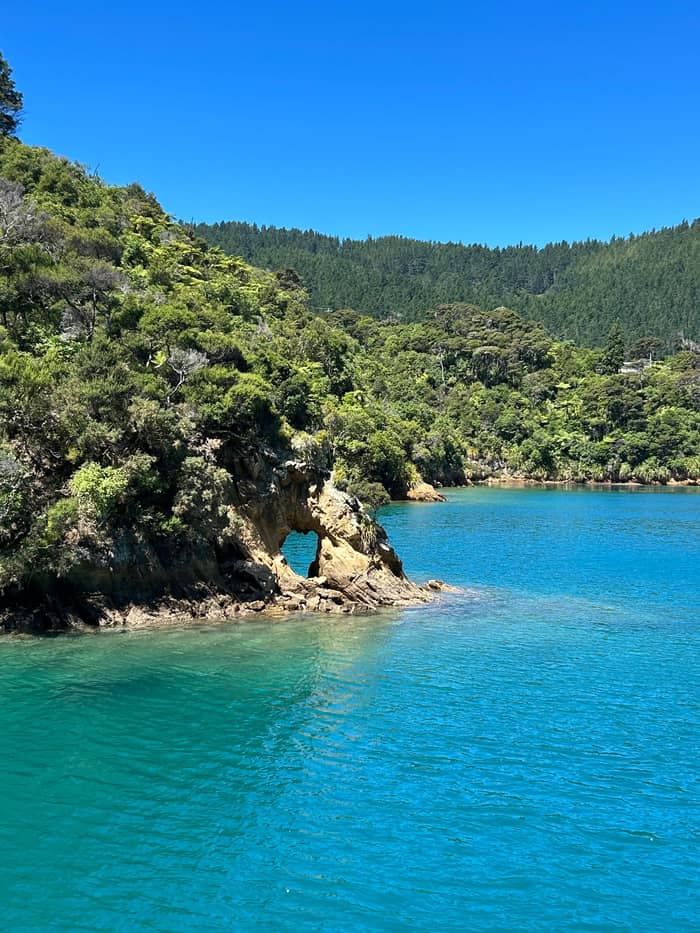
Wildlife focus
Sanctuary cruise
Motuara and dolphins
- Duration4.5 hours
- AshoreMotuara Island
- GuideEnglish
Clickable checklist
The quick version
Queen Charlotte Sound dolphins include bottlenose, Hector's, dusky and common dolphins, with orcas visiting from October to March, and they are seen year round from cruises and the ferry.
Good manners
Checklist · 11 tasks
Tick each item when it is done. Your place is saved on this device.
0 / 11 ready
You are ready. Only the date is left: pick your afternoon on the mail boat.
Book your placeBottlenose and Hector's dolphins, visiting orcas, fur seals on the rocks and rare birds on predator-free islands. What lives in the sound, when to look, and how to watch without disturbing anything.
Editorial team, queencharlottesoundcruise.click · Updated November 8, 2026 · Quick read: 8 min
Overview
Queen Charlotte Sound dolphins come in several kinds. Destination Marlborough names five species for the Marlborough Sounds: Hector's, dusky, common and bottlenose dolphins, plus the orca.1 The ferry operator adds that dolphins are seen very regularly in Tory Channel and the sound throughout the year, so even a crossing from Wellington can bring a sighting.7 None of this is guaranteed on any given day, which is part of the thrill when a pod turns up.
The bottlenose is the dolphin DOC describes as a regular visitor to the sound, sometimes visible from the Queen Charlotte Track itself.8 A bottlenose group ranges from the Marlborough Sounds to Westport.9 Adults measure 1.9 to 3.9 m, with a short beak and a tall, hooked dorsal fin, and the national population is put at 1,000 - 5,000 and listed as nationally vulnerable.10,11,12 Inshore, their dives rarely last longer than 3-4 minutes, so a pod that slips under usually reappears close by.13
Common dolphins are easiest to recognise by the criss-cross, hour-glass pattern on their flanks.14 DOC places them around New Zealand north of Kaikoura, which takes in the Sounds and Cook Strait.15 Watch for that pattern as they surface beside the boat. DOC notes they can dive to 280 metres in search of prey, and a pod can vanish for a while and pop up somewhere new.16 If a group rides the bow of your boat, enjoy it from where you sit and let the skipper keep a steady course.
Know what you are seeing
| Animal | Size | Status | Look for |
|---|---|---|---|
| Hector's dolphin | 1.5 m21 | Nationally vulnerable24 | Round fin |
| Dusky dolphin | Up to 2.11 m26 | Not threatened31 | No beak |
| Bottlenose dolphin | 1.9 to 3.9 m10 | Nationally vulnerable | Tall hooked fin |
| Orca | Up to 9 m30 | Nationally Critical32 | Tall black fin |
| Fur seal | Not given | Population growing33 | Resting on rocks |
Sizes and status as DOC gives them for each species.21,26,10,30,33
Hector's dolphins are among the smallest dolphins anywhere, and DOC says they live mostly around the coast of the South Island.20 Adults are only about 1.5 m long, and the rounded dorsal fin looks like one of Mickey Mouse's ears.21,22 DOC estimates about 15,000 Hector's dolphins older than 1 year and lists the species as nationally vulnerable.23,24 Seeing one in the sound is a treat rather than a given.
Dusky dolphins have almost no beak and a blunt dorsal fin.25 Females grow to 1.93 m and males to 2.11 m at most.26 In the Marlborough Sounds DOC notes that Admiralty Bay, in the outer Sounds rather than Queen Charlotte, is used by 200-300 dusky dolphins as a winter feeding ground.27 Calving in New Zealand runs from November to mid-January.17 When they feed together they put on a show of leaps and acrobatics at the surface.28
Telling them apart from a boat takes practice. Look first at the fin: a round fin means Hector's, a tall hooked fin bottlenose, a blunt fin on a beakless face dusky. Then look at size and colour, the hour-glass flanks of the common dolphin being the easiest pattern of all. A guide on board helps, and binoculars help more than any camera. Note the time, place and number you saw: DOC says reports of dolphin sightings are always valuable.29
Orcas in Queen Charlotte Sound are a seasonal surprise. Destination Marlborough says that from October to March you have a chance of seeing them come close to shore while they hunt.2 DOC explains that the killer whale is in fact the largest member of the dolphin family, growing up to 9 m long, with the dorsal fin of an adult male rising higher than a metre.32,30 A tall black fin cutting across the bay is hard to mistake.
New Zealand orca have unusual tastes. DOC describes them digging in the muddy sea bottom for stingrays, and stingrays are among the animals Destination Marlborough lists for Queen Charlotte Sound.37,38 The species is classed as Nationally Critical, and DOC names disturbance by vessel traffic as one of the greatest potential pressures on it today.32,39 Orca usually travel in family groups, or pods, that tend to stay together for life, so where you see one fin, look for more.40
That is why the rules matter when orcas appear. Nobody may get into the water within 100 m of a whale, a rule set by the Marine Mammals Protection Regulations 1992.41 Boats must not circle a group or cut through it, and only a few vessels may be close at any time.6 Watch from where you are, cut the engine noise if you are skippering, and let the animals choose how close they come. Steady, quiet boat handling is the courteous way to share the water.
Pick your animal
Each animal has its season and its best kind of trip.
If I want dolphins of any kind
A wildlife cruise
Dolphins are seen in the sound all year.7
If I want to see orcas
Go between October and March
That is the season when orcas come closer to shore.2
If I want rare forest birds
Land on Motuara Island
Saddleback and yellow-crowned parakeets live on the island.4
If I want to see seals
Look around Kaipupu
Fur seals bask on the rocks around the sanctuary.34
If I hope to see a whale
Watch from the ferry in winter
Whales migrate through Cook Strait then.35
Ways to watch
Wildlife focus
Motuara and dolphins
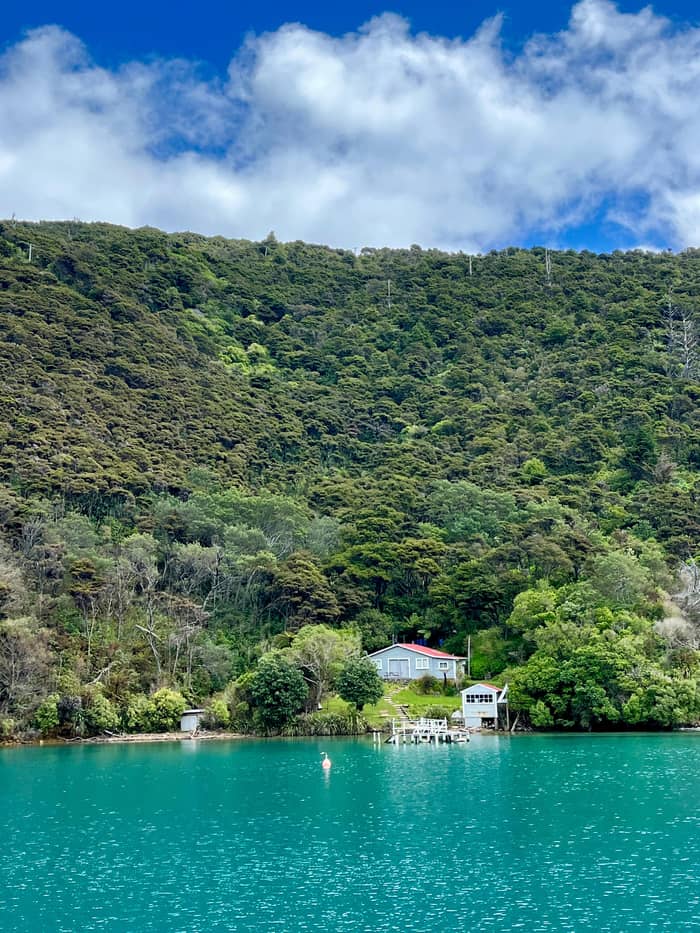
Local life
Working boat, wildlife on the way
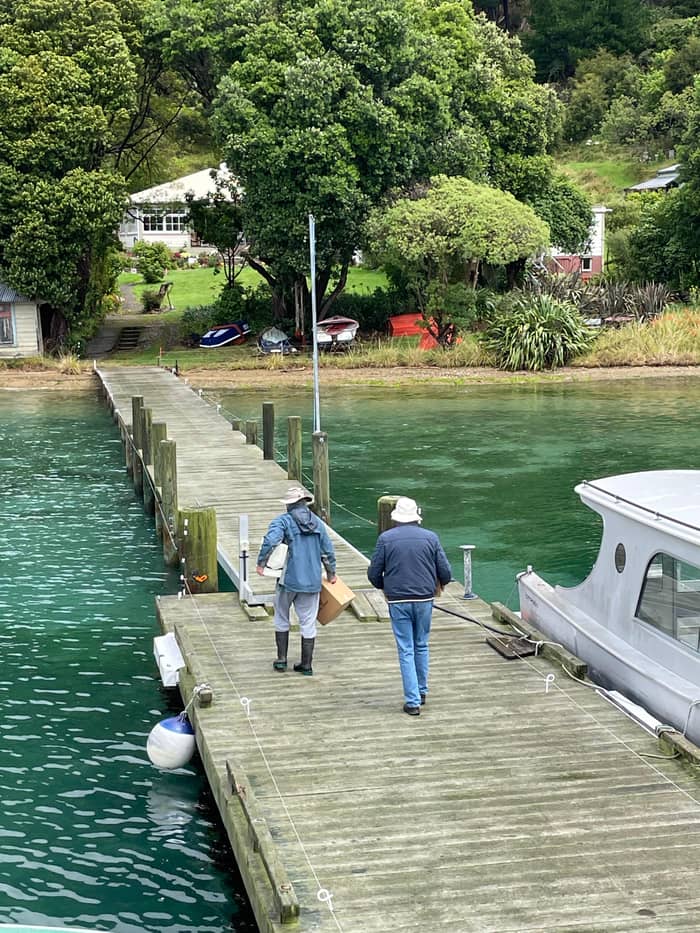
On the way
Crossing from Wellington
Whale watching in Queen Charlotte Sound is about luck rather than a schedule. Humpback whales travel the edges of Cook Strait in winter and only sometimes enter the Marlborough Sounds, which Destination Marlborough says does not happen often.3 Interislander notes that whales can be seen migrating through the strait in the winter months, so the ferry deck is a fair place to watch.35 Humpbacks cover approximately 10,000 km/yr between feeding and breeding grounds.46
The history of whaling here is long. New Zealand's first onshore whaling station opened at Te Awaiti in Tory Channel in 1829, and the Perano station next door ran from 1911 to 1964.47,48 Interislander says more than 3,500 whales were hauled ashore at Perano for processing.49 The last whale there was harpooned on 21 December 1964, and the station announced its closure in the first days of 1965.50
Recovery is now measured by the same eyes. DOC has run whale surveys in Cook Strait every year since 2004, and for over a decade old whalers returned each June and July to spot the animals they once hunted.51,52 If you see a whale, report it to DOC; sightings help track how the population is coming back. Cruises in the sound are not whale-watching trips, so treat any whale as a bonus.
Wildlife trips from Picton
Set your group size and see what each wildlife trip costs in total.
Weigh up 3 options
Set your group size and see what each wildlife trip costs in total.
≈
View≈
View≈
ViewGetYourGuide's starting prices, converted at the ECB reference rate; exact pricing appears when you book.
A year of wildlife
Spring
Orcas may come close to shore from October.2
Early summer
Calving runs from November to mid-January.17
Summer
The moult falls between November and March.18
Late autumn
Adults come ashore in May and June.19
Winter
They pass Cook Strait and sometimes enter the Sounds.3
Year round
Dolphins are seen regularly in the sound.7
New Zealand fur seals, kekeno, are the most common seals in the country and their numbers are growing.33 They spend about half their time at sea and half on land, resting on rocks and caring for pups.53 Destination Marlborough points to the rocks around Kaipupu Wildlife Sanctuary near Picton as a good place to see them, from a boat or a kayak.34 At sea they forage for fish and squid, so you may also spot a dark head bobbing in open water.53
Keep at least 20 m away from any seal, never feed it and never try to touch it.5 Disturbing or harassing a seal breaks the Marine Mammals Protection Act 1978.54 If one is lying on a rock near your path or your kayak, give it a wide berth and enjoy the view through your zoom instead.45 Keep dogs well away too: an owner whose dog attacks a seal can be prosecuted, so keep any dog on board quiet, leashed and well back from the rail.55
Little penguins are the other small marvel. DOC describes them as just over 25 cm tall and about 1 kg, and by day they are most likely to be spotted from a boat in sheltered harbours and inlets.56,42 Adults come ashore between May and June to prepare nests, and their moult, lasting about two weeks, falls between November and March.19,18 On Motuara Island you may see nesting boxes with downy chicks inside.57
Video
NZ Pocket Guide on YouTube · The video waits until you tap play to load.
Spot the king shag, a rare bird with a population of 500-600, which sit off Motuara Island, three other nearby islands, and nowhere else in the world.
Motuara Island is the bird highlight of the sound. DOC has brought in saddlebacks, South Island robins, yellow-crowned parakeets and Maud Island frogs since the rats were removed in 1992.4 Destination Marlborough counts around 200 South Island saddleback there today.58 The species as a whole numbers over 2000 birds, all descended from 36 birds rescued in 1964, and it reached Motuara in 2009.59,60
The rarest bird of the Sounds lives on the water. Destination Marlborough puts the king shag population at 500-600 birds, roosting off Motuara Island, three other nearby islands and nowhere else in the world.36 DOC's aerial census in May 2025 counted 239 birds and 197 occupied nests across the colonies it checked, a total 30-40% below the 287-326 pairs found in the counts from 2019 to 2021.61,62 The two sources count differently, so the two figures are not directly comparable. Give their nests and roosts a berth of at least 100 metres.43
Around the sound you will also see gannets, terns, shearwaters, white-faced herons, kingfishers and oystercatchers.63 DOC adds that gannets sometimes plunge into the water after fish, and terns and shearwaters may join in where fish are plentiful.44 When Joseph Banks visited during Cook's first voyage, he wrote of waking to birdsong so loud that it sounded like small bells.64,65 An early landing on Motuara is the moment to listen for it.
The rules are simple and they are the law. Harassing or disturbing marine mammals is a criminal offence, boats must keep at least 50m from whales, stay below 10 knots near marine mammals and never circle them or cut through a group, and no more than three vessels may be within 300m.66,6 DOC asks everyone to use a zoom lens instead of getting close.45 If you skipper your own boat, slow right down as soon as you see a fin.
Feeding wildlife is out too. DOC warns that human food can make native birds sick and even kill them, and it advises against feeding any wild animal.67 On islands like Motuara, check your bags for seeds and pests before you land.4 If you see an injured animal or anyone harming wildlife, call DOC's hotline and note the place and time. Small steps like these keep the animals of the sound wild and unafraid of the boats that pass them every day.
Which trip suits you? The cruise this page books is a 4.5 hours wildlife outing from Picton with a guided walk on Motuara Island, stops for fur seals, dolphins and seabirds, and an English-speaking guide, from $99. The site's mail boat run also meets dolphins and seals along the way, and the ferry itself crosses waters where dolphins are seen year round.68,7 Whichever you choose, bring a warm layer and a hat, and dress for a breeze once the boat leaves the shelter of the harbour.
FAQ
Dusky, bottlenose, common, orca and Hector's dolphins use the Marlborough Sounds.1
That is when Destination Marlborough says they may come close to shore.2
Humpbacks pass the edges of Cook Strait in winter and only occasionally enter the Sounds.3
DOC asks you to stay at least 20 m away and never to feed or touch a seal.5
Saddleback, robins and parakeets live on the predator-free island.4
Swimming within 100 m of a whale breaks the law, and orca are no exception.41
Sources
Mail boat, water taxi or a day on the track? Ask a real person here.